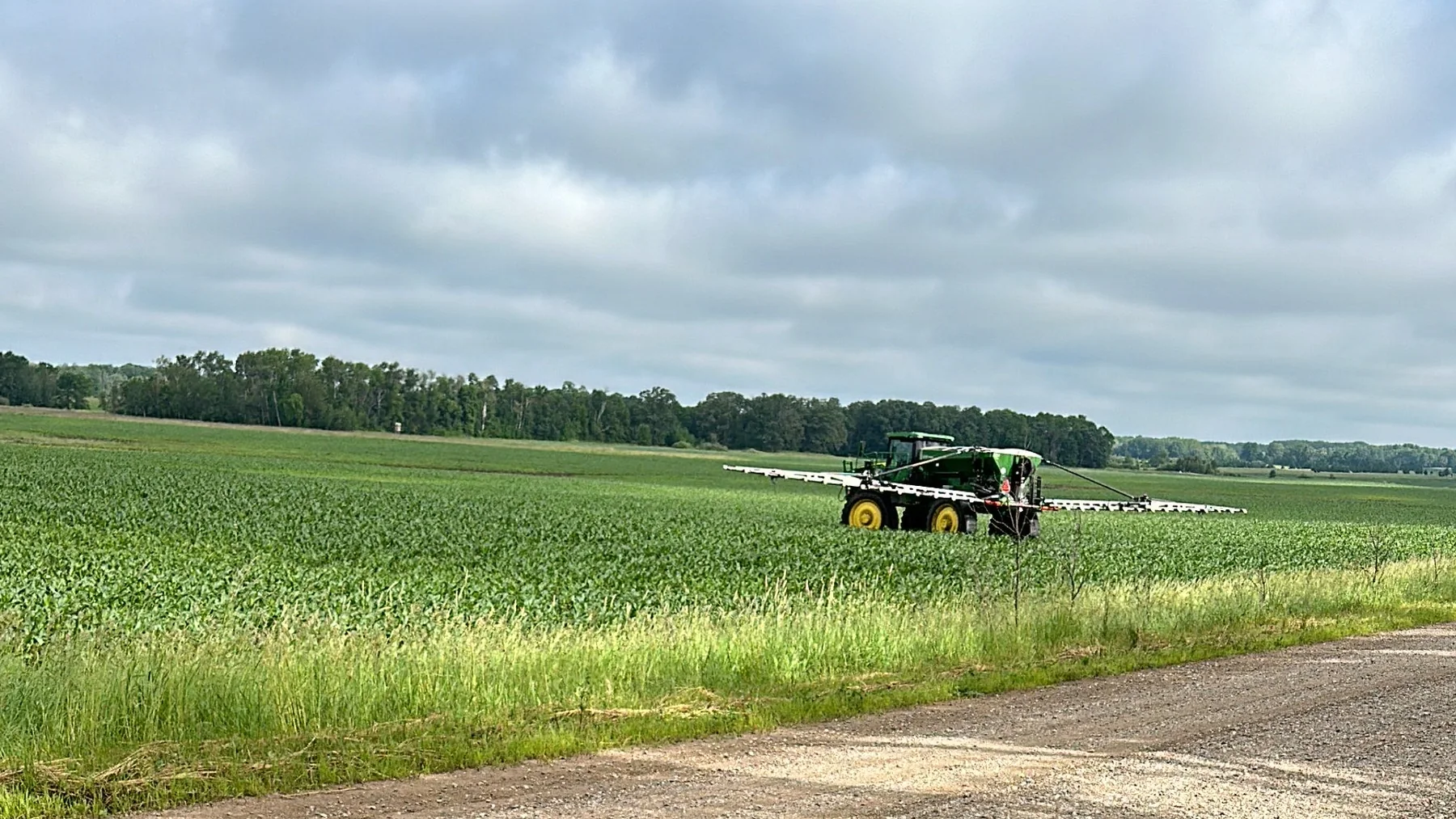
There are passes that look important because the machine is impressive. Then there are passes that matter because the crop tells you a few days later.
This one was both.
At the start of July, the corn topdress went on with a two-bin machine so we could keep nutrients moving the way the field needed them. Nitrogen, sulfur, and potassium all went on variable-rate — not one flat answer dragged across every acre.
That matters here because the fields do not act the same from end to end. The lighter ground, the better water-holding spots, the hills, the lower areas, the zones with more yield history behind them — they all earn a different answer. Variable-rate is not about making the map look pretty. It is about refusing to pretend the whole field is one field.
The timing helped. After the pass, July finally gave the crop what it had been waiting on: heat and rain. The corn just blew up. You could see it in the color, the canopy, and the way the field started to close rows in a hurry.
The point was not just more fertilizer
The point was putting the right pieces where they belonged.
Nitrogen carries a lot of the headline weight in corn, but sulfur and potassium are not side notes. Sulfur helps the crop use nitrogen well. Potassium is a big part of water movement, stalk strength, and keeping the plant running when July turns hot. If the crop is short on any of those, yield potential can leak away quietly.
So the pass was built around the same idea we keep coming back to: soil tests, tissue tests, zone history, and field reality all need to end in something a machine can actually do.
That is where the two-bin setup helped. It let the application follow the map instead of forcing the map to follow the limitations of one blended product.
Then the weather did its job
A plan still needs weather. We can build the cleanest prescription in the world, but if the crop sits cold and dry afterward, the field will make us wait.
This time, the timing lined up. The nutrients went on, the heat came, the rain came, and the corn responded like it had been waiting for permission.
That is the part of farming that keeps a person honest. You can do the homework, build the map, and make the pass. Then you still have to wait on the sky.
But when the crop answers, it is worth writing down.
— Michael Steeke, fourth generation