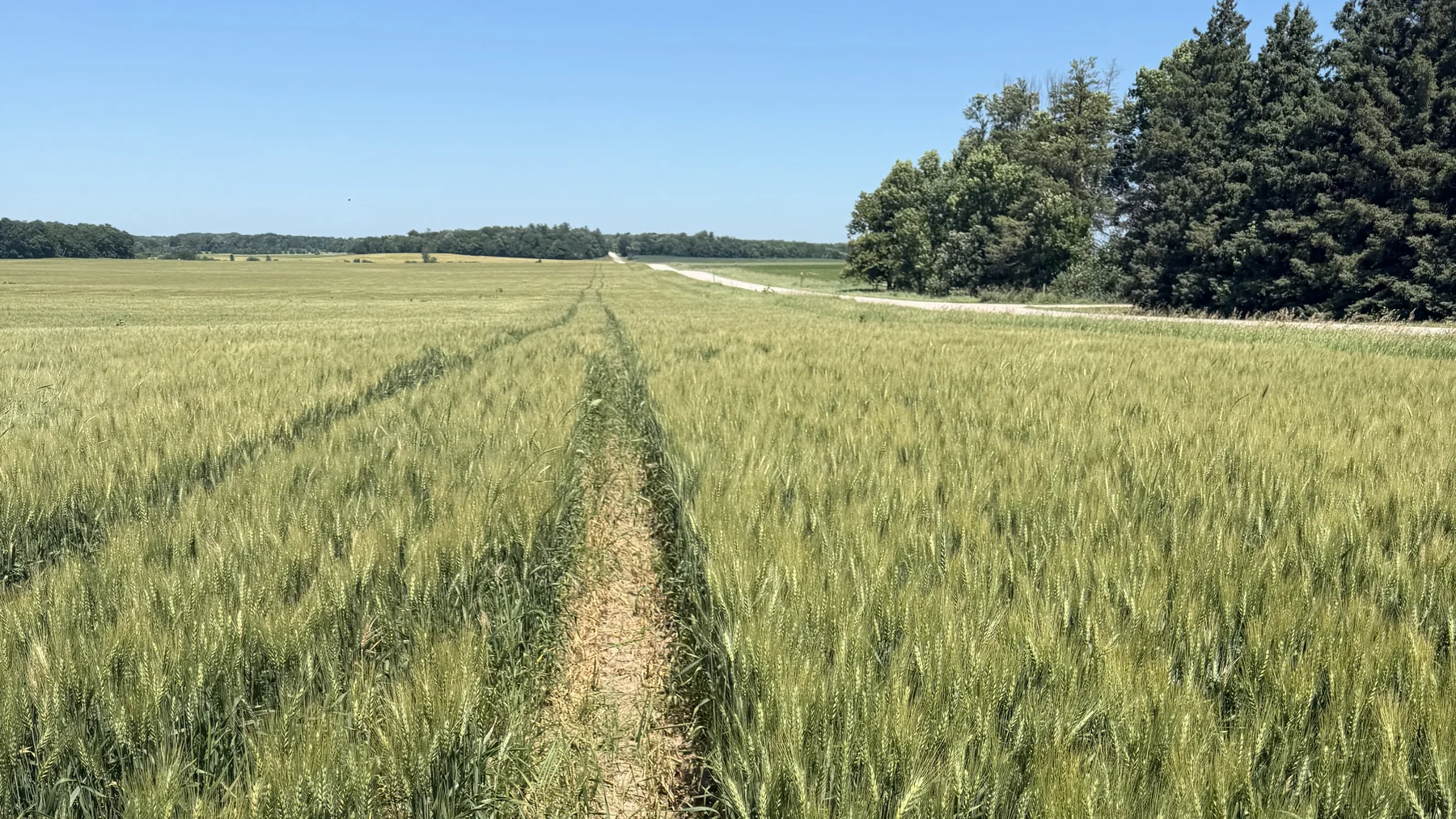
By this point in the season, a wheat crop can look close to finished. The heads are out. Most of the vegetation is built. But the final value of the crop is still being decided.
Protein is one of several measurements that determines what the grain is worth. It is not the only one, but you never want to come up short because the elevator will clip you.
That is why we went back out after heading and pulled another round of soil and tissue samples. We wanted to know whether the crop had enough nitrogen left to finish the job — and whether it had the groceries needed to use that nitrogen well.
Enough nitrogen is not the same as usable nitrogen
We split-apply nitrogen to keep the crop metabolizing it efficiently instead of leaving idle nitrogen in the soil. When nitrogen sits there before the crop needs it, biology has a reason to consume available carbon without doing useful work for the crop.
Matching nitrogen to crop demand has helped us lower total nitrogen use in corn. We are starting to measure the same efficiency in small grains, but wheat adds another question: did we leave enough late-season nitrogen for the crop to build vegetation, fill grain, and finish with the protein we need?
Even then, nitrogen is only part of the answer. Sulfur, carbon and energy, molybdenum, cobalt, and the rest of the micronutrient system all affect how well the plant can convert nitrogen into amino acids and, eventually, grain protein.
The tissue results gave us pieces of that picture. Nitrogen and sulfur were in the middle range. Molybdenum met the baseline we were looking for. Potassium was low in both samples, and magnesium was lower in one. That did not produce an automatic yes or no on a late pass. It gave us a better question to work from.
A decision, not a recipe
A late nitrogen application can look simple on paper. In the field, it still has to fit the crop stage, tissue balance, weather, disease risk, and the realistic chance of improving final grain quality.
That is the point of taking the sample. We are not trying to spray because the calendar says it is time. We are trying to make the crop show us what it still needs — and leave it alone when the answer is nothing.
The goal is not more nitrogen. The goal is to help the crop use the nitrogen it has, finish the grain, and protect the quality we have spent the season building.
— Michael Steeke, fourth generation