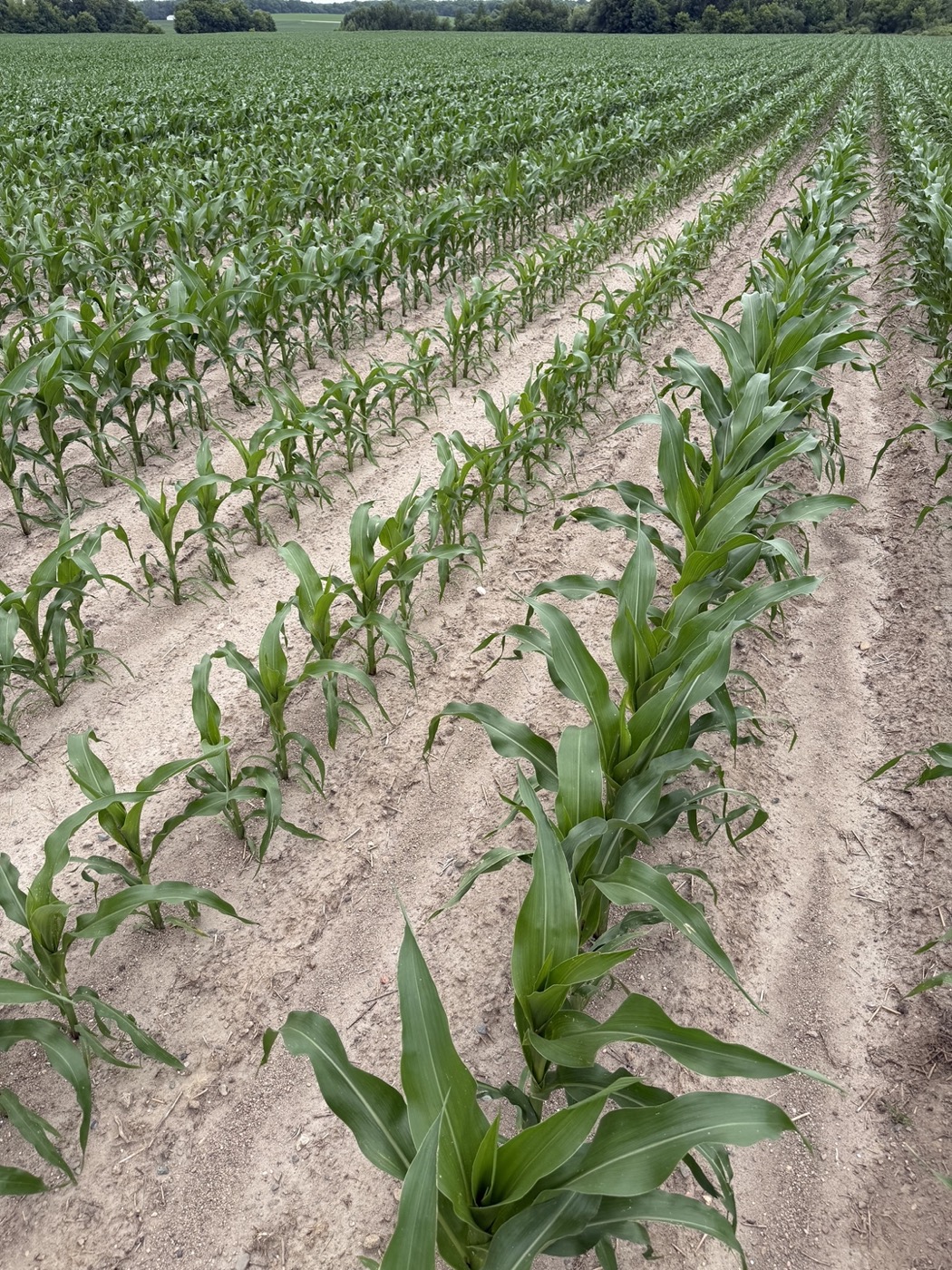
A plugged 2×2×0 line turned into an accidental field trial.
Two rows missed the planter-applied fertility blend — liquid urea, liquid AMS, humic acid, and boron — and the difference was visible in-season. The treated rows showed stronger early growth and better color.
That is why we run fertility beside the row instead of asking the seed to carry the whole crop alone. A 2×2×0 band puts nutrition close enough for early roots to find it, but not directly in the seed trench. On our ground, that gives the plant a better chance to keep moving through cool spring conditions while the broader fertility program and soil biology come online.
This pass was not meant to be a trial. The plugged rows simply made the comparison visible: where the planter-applied blend was missing, the crop looked different.
That does not prove final yield by itself. A photo is not a yield monitor. But it does show the starter blend was doing real work when the crop needed it.
That is the kind of field note worth keeping: not a perfect replicated trial, but a clear visual reminder that placement, timing, and early nutrition matter.